Designing an efficient and pleasant consultation experience for both pharmacists and patients.
My Contribution
The Pharmacists Clinic at UBC is Canada's first university-affiliated, pharmacist-led, patient care clinic. It offers 1-on-1 and group appointments to provide comprehensive medication management services to patients. I was brought in as a consultant to lead the initiative of improving the clinic's service from a human-centered design approach.
Over the summer, I led the project starting from research to design to address points of improvements in the service on all levels. It's still a work in progress where we are currently continuing efforts to implement solutions to issues that were identified.
Please note that certain elements were intentionally blurred out or kept small due to NDA.
My Role
UX/Service Designer
Timeline
May 2021 - April 2022
Team
Clinic Director, Research Coordinator, MOA, Pharmacists
Tools
Qualtrics, Miro, Nvivo, Figma
OUR APPROACH
Exploration
Identify project objectives and current service model with stakeholders.
Research
Conduct research on patients, clinicians, and MOA to better understand user journeys and issues.
Analysis
Analyze research data to identify areas of improvements for different user groups.
Solution
Prioritize issues and brainstorm/prototype solutions.
Exploration
In the initial exploration phase, I focused on working with the clinic team through stakeholder interviews to align the core project objectives, gain a better understanding of the current service model, and to clarify the existing constraints.
Project objectives
Review appointment process to identify patient, clincians, and MOA pain points
Review the effectiveness of the tools used to support service delivery
Recommend solutions to improve the service delivery of patient's appointments
Current service model
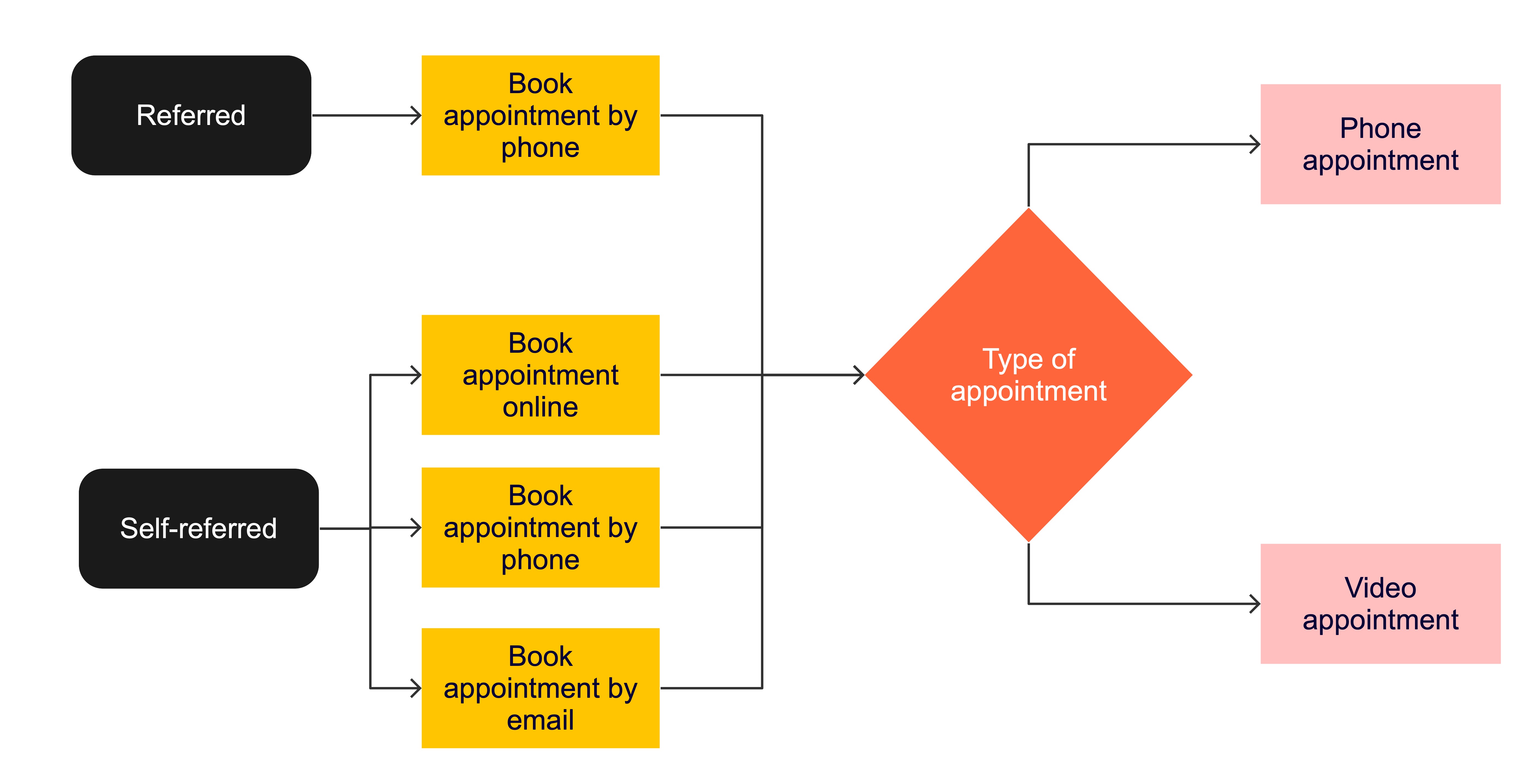
The currently offers phone appointment and video appointment supported by MS Teams. Additionally, a patient can either self-refer or be referred where there are a mix of booking methods.
Research
Understanding MOA & Clinicians
I thought it was important to start off by learning more about our internal users who are the MOA and the Clinicians. As the core service providers, they must be able to work efficiently and effectively in order to provide patients with the best experience. interestingly, I found that there was a lack of knowledge in what each clinic member does and their pain points which is important as the basis of future improvements.
Before devising a research plan, I came up with a few focal points for both MOA and clinicians to scope down on the areas of interest.
Focal Points for MOA
- What are the key activities for an appointment for MOA?
- How effective is the task delegation between MOA and the clinician?
- How are different technologies/systems used to facilitate different tasks?
- What aspects of the current process for MOA is problematic in terms of usability and efficiency?
Focal Points for Clinicians
- What are the key activities of an appointment for the clinician?
- How does the process change depending on the type of appointment? (phone vs video/ initial vs follow-up)
- What tasks are frustrating and time consuming for the clinician and why?
- How do the pain points differ for novice vs expert clinicians?
Research Methods
Using the focal points as a guide, I created a suitable research plan consisting of semi-structured interviews and field observational studies. The general plan is as follows:

Patient Research
After gaining understanding of the appointment process and what we want to know from patients, I decided to start the patient research process.
Focal Points for Patients
- What are the patient's preference of device/platform, tech-competency, motivations, and needs?
- What do patients do to book the appointment, prepare for the visit, consult with clinicians, and communicate with clinicians after appointments?
- What are the challenges or points of frustrations that patients run into during the appointment process?
- How was the patient's appointment experience impacted by the transition to virtual appointments?
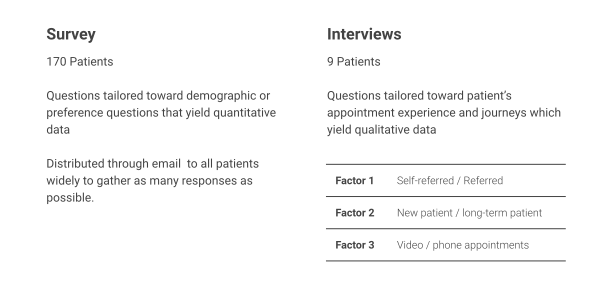
Research Methods
Analysis
Data Analysis Method
There was large amount of qualitative data that resulted from the interviews and surveys which we decided to tackle using thematic analysis. Since the timeline was relatively long for this project, I decided to use NVivo to thoroughly code and organize the qualitative data to find insightful information.

Personas
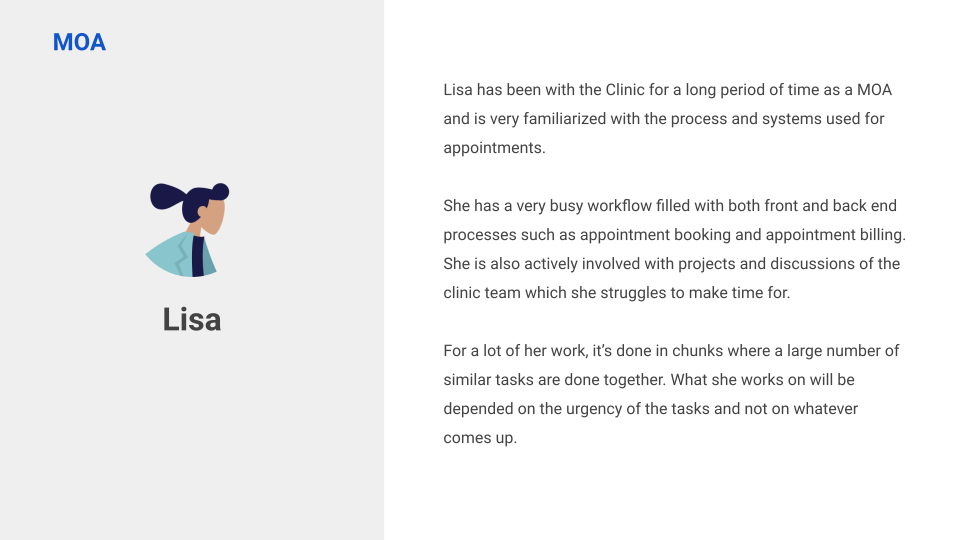
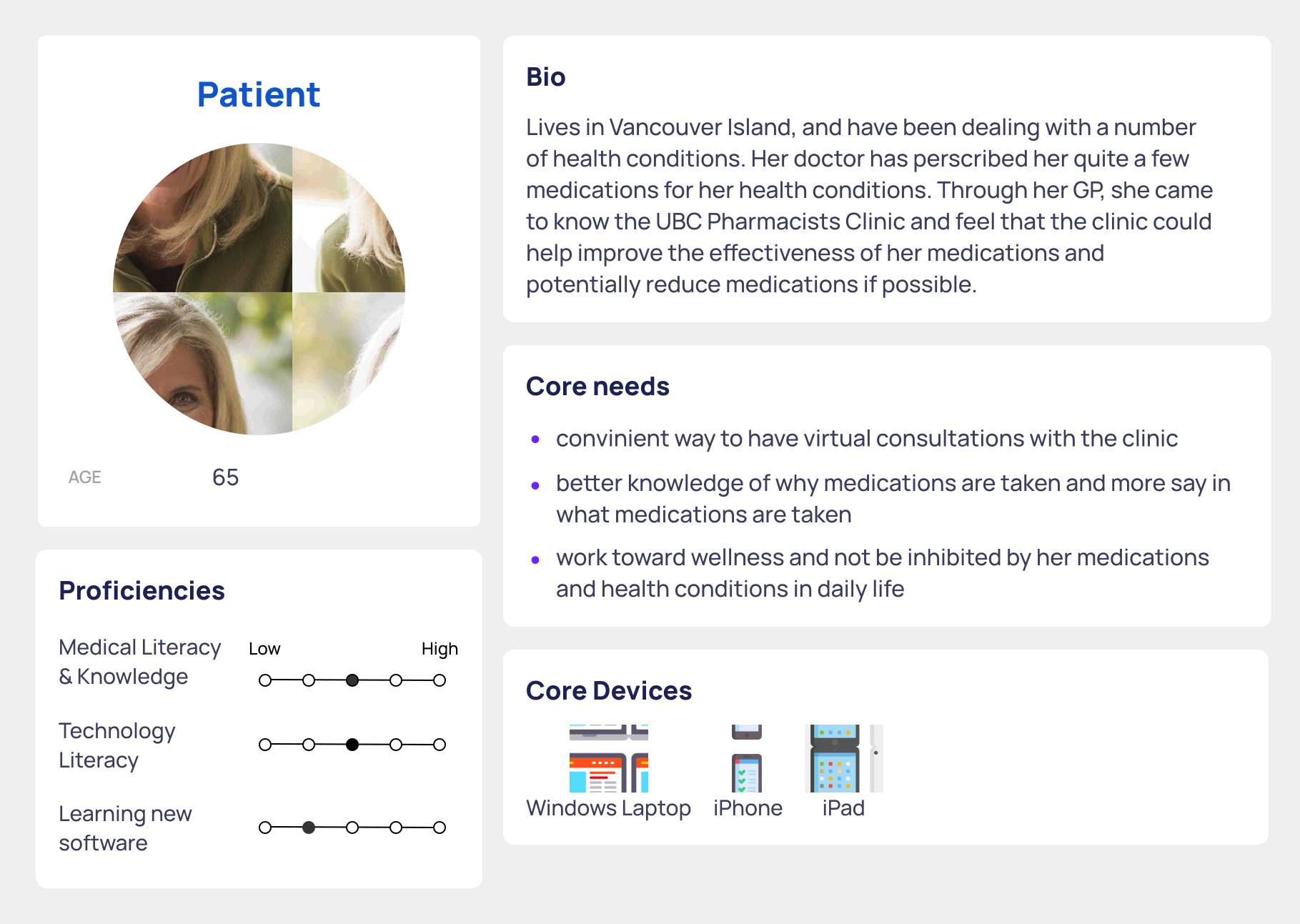
As a starting point, I created a few personas for MOA, Clinician, and patients to highlight relevant information about these user groups to inform future analysis and solutions.

Journey Mapping
Based on the user research data and personas, I created 3 journey maps highlighting MOA, clinician, and patient's process, touch points, emotional journey, and pain points. This enabled me to visualize a big-picture view of what users do and feel throughout the appointment journey and how they interacted with the clinic across multiple touch points.


After the initial draft of the journey maps, they were shared with the internal clinic team to validate whether the mapping is reflective of their own experiences. They were then iterated over through further discussions.
Service Blueprint
To have a more holistic picture of the service, with a focus on the relationships between the different people and components and how they are tied to the patient journey, we decided to create a service blueprint as a continuation of the journey maps.

Solution
Prioritizing Issues & Opportunities
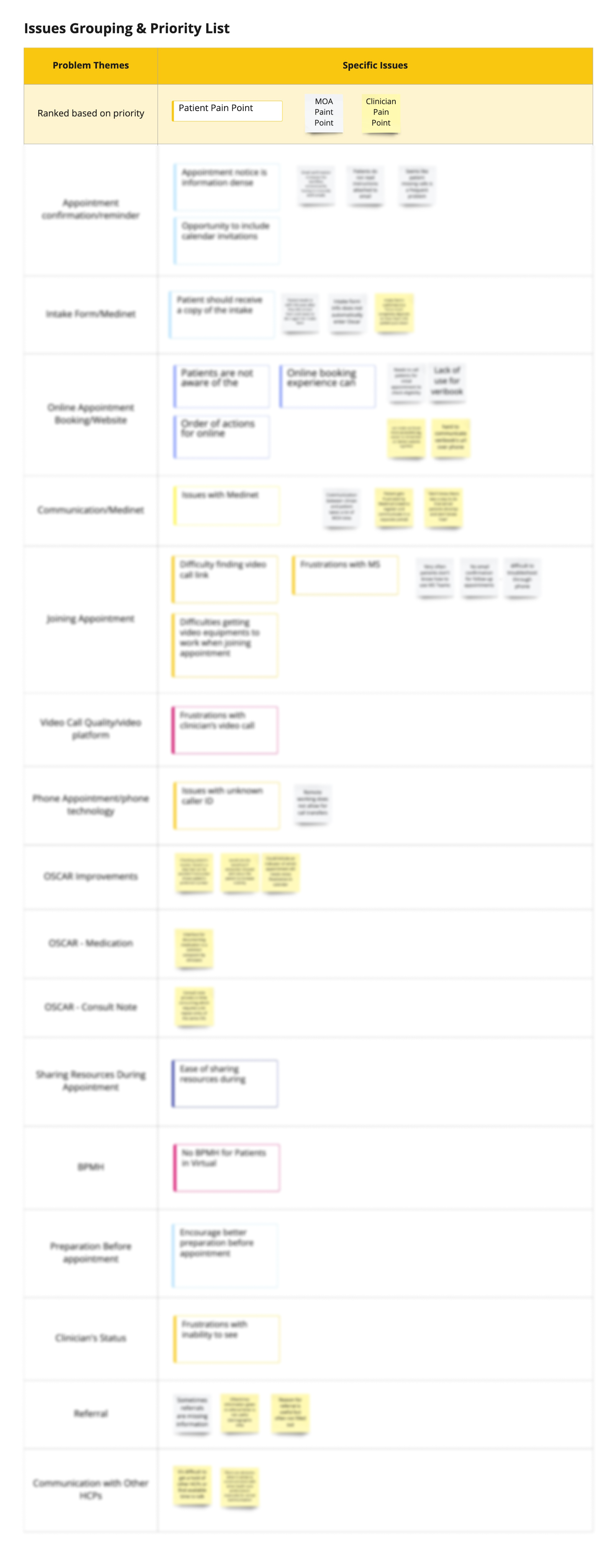
After identifying the pain points for patients, MOA, and Clinician, I grouped similar issues by themes and ranked them by priority with the clinic team. The priority was determined by criteria of importance to the patient, importance to the clinic team, and feasibility. This gave us clearer insights on what and how to tackle the issues to improve the overall appointment experience.
Tackling Issues & Opportunities
After a better understanding of the pain points and their priorities, we started diving into the ideation, implementation, and testing phase to create solutions that can effectively address the problems identified. Below are some examples of the initiatives that have began in addressing some of the key issues.
Improving the Online Appointment Booking Process
.jpg)
From the service blueprint and the user research, we identified 2 areas that can be improved regarding the online appointment booking process. First, for patients, the order of the steps for online booking can cause potential frustrations. Specifically, since patient's appointment is confirmed automatically after booking, there can be cases where patients told to be not eligible for appointments are receiving confirmations of appointments. Secondly, the MOA has the call patient after online booking to gather information and check eligibility, it increases workload for both MOAs and patients.
.jpg)
After discussion with the clinic team, we came up with an alternative workflow that addresses both issues identified. We realized that since there isn't a large amount of info we needed to collect from patients, we could collect them online when patients are booking appointments which eliminates the need for our MOA to call patients.
We also changed the patient flow where when a patient books an appointment, they would receive a notice indicating pending appointments instead of confirmation. The appointment confirmation, instead, will only be sent to patients after the MOA has checked their information and confirmed their appointment.
Decluttering Appointment Notices

One key issue that many patients have brought forward is that the appointment confirmations and reminders are too informational dense, making it difficult to scan and digest key information. The pain point was also highly prioritized since it also contributes to other issues such as patients not completing intake forms or not knowing how to join appointments.
One limitation of emails are that they have to be plain-text emails instead of html due to the Veribook service the clinic was using. This greatly limited the styling options for the emails. Nonetheless, after discussions with patients, we were able to gain a much better understanding of which information are important to include and are useful to patients. Combined with literature search of best practices for plain-text email reminders, we were able to iterate on the previous appointment notice template which was again tested with patients.
KEY TAKEAWAYS
UX encompasses much more than a single interface or app
Designing a service instead of a digital interface has really opened my perspective on the scope one should consider when trying to improve the user experience. In this role, especially, I was able to practice using methods such as journey mapping or service blueprint to consider the scope beyond a specific digital interface. By considering the entire journey of a user and their interactions with all touch points, I was able evaluate the user experience much more holistically.